Monday, October 29, 2012

A Conversation With David Camisa

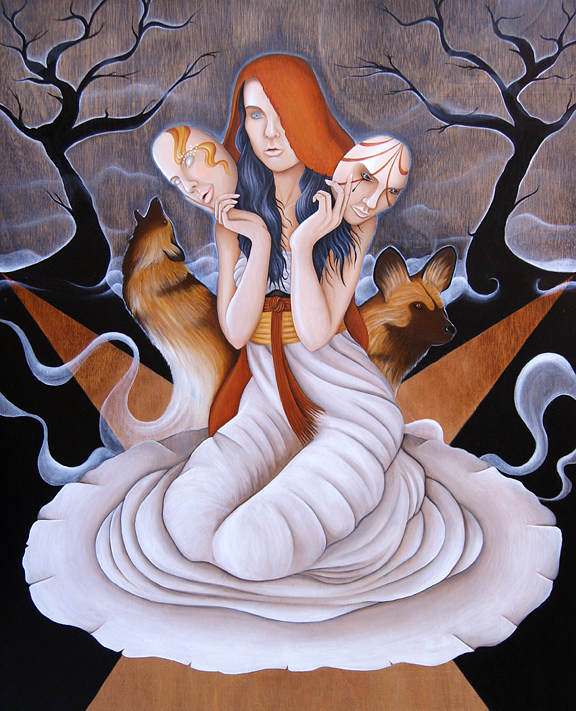
"Prelude To A Monster" 2011

David Camisa, an artist from Vancouver, British Columbia, creates fantastic, surreal paintings that explore mythology, nature, feminine beauty and more. Camisa spoke with ArtSeen about his artwork and his artistic inspirations.
  
Can you tell us a little about your artwork, artistic process, and what types of artistic materials you use?

My work has changed a lot over the years but I'd say I've been drawing for as long as I can remember. I grew up obsessed with comic books and, as a result, spent a great deal of my time emulating my favorite artists. It wasn't until I left high school that I began exploring with other mediums and fell in love with painting. After trying my hand at a number of techniques I began exploring with oil paint and wood and finally found the perfect fit for the type of work I wanted to create. Now most of my pieces generally go through the same transformation process: sketch, to full scale illustration, to completed painting.

What inspires you as an artist? Why do you create art?


As generic as it may sound I draw a bit of inspiration from everywhere. Whether it's our relationships with one another, the world of nature around us, or even the lyrics in a song - the catalyst for that next idea could be anything. For me, the challenge is to take something we can all relate to, something familiar, and twist it slightly; creating a surreal image unlike something you're likely to see in real life. I can't say exactly what it is that drives me to create art, it's simply something that has always felt so natural to me and I don't think I'd feel whole without it. 

""Crossroads" 2011

What types of themes, ideas, or concepts do you explore within in your artwork?


I think a great piece of art is like a great story; it pulls you in and begs you to know more about its characters and surroundings. My aim for each piece is to convey emotion in such a way that people feel that connection and become compelled to delve deeper into what that piece means to them. There's no right or wrong way to interpret my work, simply discovering what story it unfolds for you. 

Who are some artists that you admire, and why?


There are a number of artists whose work I love but I would have to say two artists I really admire would be Alphonse Mucha and Audrey Kawasaki. Both of their works are so unique but they share a crisp, clean style and feature captivating characters whose emotional state always packs a punch. Mr. Mucha is obviously no longer with us but I'm always awaiting new work from Audrey Kawasaki and she consistently blows me away every time. 


"Helen" 2012

What’s the best and worst thing about being an artist?

The best thing about being an artist is getting to do what I'm so passionate about while getting to share it with others. It's wonderful to create art and be given the time to produce work I'm interested in making and it's equally as rewarding to share that work with an audience and have them respond to it. 


The worst thing would have to be that it can sometimes be an awful lot of work with little to no payoff; shows can fall through, submissions can be rejected and, all in all, a fairly uncertain road can lie ahead. That's why it's always important to be up for an adventure and continue to create work that means something to you because that's the one thing you can be in control of. 

"Arachne" 2011

Can you talk about any current or future projects you are working on?


I certainly can! I've spent the last few months preparing for an exhibit featuring my work at Tasty Gallery (www.shoptastyart.com) in Seattle. Opening on November 9, "Triumphs & Tragedies" is a collection of work all inspired by Greek mythology. I've always been drawn to dramatic stories and myths and it's been so much fun to put my own spin on such classic tales.

And finally, what advice would you give to other artists?


Just keep creating. If you're pursuing a career as an artist then keep practicing, persevere, and never give up. You're bound to hear a few "no's" along the way (and if you don't, I'd love your secret as I certainly have!) but stay true to yourself and keep honing those skills. It will pay off in the long run.


"Pandora" 2012


For more information about artist David Camisa, you can visit his website, blog, Facebook page, Myspace Page, Deviant Art page, Artslant profile and follow him on Twitter for more details. 

All images courtesy of David Camisa.

Monday, October 22, 2012

A Conversation With Cory Benhatzel

"Talisman" 2012

Cory Benhatzel, an artist from Amherst, New York, creates gorgeous artwork that combines elements of nature, the occult, symbolism, layers of multiple meaning and much more. What strikes me the most about Benhatzel's artwork are the ornate, decorative qualities and the beautiful colors that make up her creations. Benhatzel spoke with ArtSeen about her artwork and artistic inspirations.

Can you tell us a little about your artwork, artistic background, and artistic processes?

Ever since I was a kid I loved drawing and painting, and it always made me feel very special from the attention that it got me. Making art always made me so happy and I always knew that it was what I wanted to do for the rest of my life.

At eighteen I moved cross country, alone, to Los Angeles to attend Otis College of Art and Design and continued to live there for several years after I graduated with a bachelor’s degree in fine arts. After graduation I tried several art-related fields including tattooing, teaching, and gallery work, but I always felt unsatisfied. Particularly from working for galleries, I came to realize that I wanted to be a full time artist, making artwork for myself, and to one day be self-employed. It took me a long time to become disciplined enough to develop a work ethic for this and humble enough to realize that I had (and have still) so much more to learn.

My artistic process involves using reference material mostly from the natural world that I find inspiration from and can then attempt to create the images that I see in my head. I make a design and transfer that onto birch panels. Then I draw more freehand onto the board and add a layer of matte medium. I then paint with Liquitex acrylics and Golden gloss medium, sometimes layering more, glazing colors, and sometimes keeping it simple, letting the wood grain show through. I love white gesso, and oftentimes use black gesso, and other color tinted gessos that I’ve mixed and always seem to gravitate towards.  Once the painting is to where I want it I varnish it to make it nice, glossy, and fade resistant.


"Conjuring" 2012
 
What inspires you as an artist? Why do you create art?

The animal world has always been my major source of inspiration; the intelligence, magic, and dignity of animals has fascinated me since I was a child and was a major factor in my decision to move back to upstate New York three and a half years ago from Los Angeles. The duality of the beauty and brutality of nature is another source of constant inspiration.

Besides nature, music, the occult, including various forms of divination, and magic are all inspirational. The idea of hidden messages, all forms of symbolism, has always been important, as well. I use Floriography (the Victorian era practice of sending coded messages using flower arrangements) in my work, so every flower in each painting holds a specific meaning pertinent to the overall theme of the work.

Basically I create work because I have to; it’s compulsive, and it’s the only thing I’ve ever been really good at.


What types of themes, ideas, or concepts do you explore within in your artwork?

The natural world meeting the mystical world; the occult, Norse paganism, the doppelganger, divination, victory, protection, the dance between life and death, triumph, and love.


"Charming (The Spirits)" 2012

Are there any artists that inspire you? If so, who would they be and why?

Yes, there are always artists who make me feel like I need to up my skill level, too many to list. It’s inspirational to see what other people are up to.

What do you think the role of the artist is?

I honestly have no idea how to answer that question. For me personally, I can really think of myself as an artist now because I work really, really hard at what I do and always try to get better. I’ve learned that it’s best to stay humble and learn as much as I can; that it’s always best to be as kind as possible.


"Unmasking Secrets" 2012

What projects or gallery shows would you consider career highlights or personally important to you as an artist?

Well, I recently had my first real solo show called Talisman at Modern Eden gallery in San Francisco, so that was especially exciting. 

And finally, what advice would you give to other artists?


Work hard, stay humble, and be nice!  Never stop researching and putting yourself out there. Be as professional as possible. Learn time management! Always put out the highest quality of work that you possibly can. Whatever your idea of success is, don’t stop working towards it, and keep making the goal bigger and bigger. 

The best advice is to figure things out for yourself. Like anything else in life, you will make mistakes and have bad experiences, but it’s important to learn from that, and persevere.


"The Peafowl Widow" 2012

For more information about Benhatzel and her artwork, you can visit her website, blog and Twitter.

All images provided by Cory Benhatzel.


Friday, October 12, 2012

A Conversation With David Amorando

"Phantom"

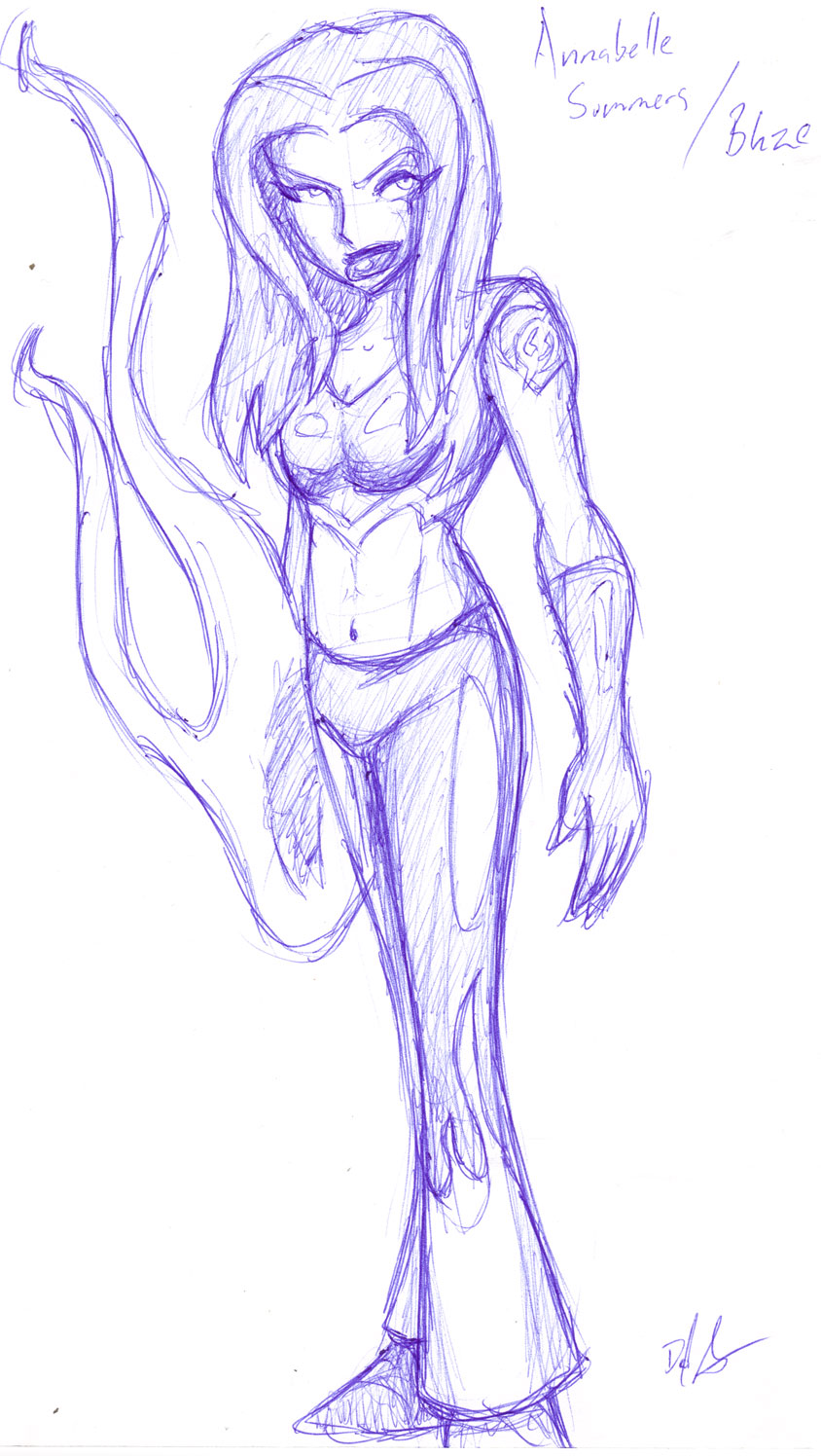
David Amorando, a freelance cartoonist living in Cincinnati, Ohio, is saving lives everyday. Well maybe he isn't, but his artistic creation, Lightning Man, is. Amorando spoke with ArtSeen about his creations and his artistic process.

Can you tell us a little about your artwork, artistic process, and what types of artistic materials you use?
Sure. I'm a freelance cartoonist who writes and draws a print and webcomic based on my own character “Lightning Man.” Lightning Man at its core is a superhero story. I basically started drawing this character in high school.

When it comes to the process, usually I just start drawing the story I want to tell. Since comic books are a visual medium it's important to be able to convey the story with pictures. The approach is a little backward as most comics are scripted first, but it's the process I feel most comfortable with.

As for materials, it varies. For the printed comic I use industry standard comic art boards and two mechanical pencils (a 0.5 with 2H lead and a 0.7 with HB lead). The colors are done on the computer. I send it off to my publishers at Hazzum Productions who inks and letters on the finished product.


"Belle"

What inspires you as an artist? Why do you create art?
The cop-out answer for that would be "everything inspires me" but that's the truest answer: everyday life, people, and humans wanting to do more for their community. That's what a hero is. And when I write/draw comics I take that away. Also, the city of Cincinnati; it has inspired much of the background art in the Lightning Man webcomics. That made the transition of taking the universe of Lightning Man from the fictional city of Mineport to setting the printed book in the very real Cincinnati, OH.

The reason I create is simple; I like telling stories. I always try to tell a fun story with great characters.

What types of themes, ideas, or concepts do you explore within in your artwork?

The themes are pretty basic ones: power, responsibility, maturity. What makes a man turn into a monster? What makes another become a hero? Though, it's not really that deep or philosophical. After all, how is that fun?


"Spidey and Belle

Who are some artists that you admire, and why?

Four creators stand out to me: Bruce Timm, Seth MacFarlane, Joss Whedon, and Trey Parker & Matt Stone.

Bruce Timm's art helped me develop my style. It's a take on his work on Batman: The Animated Series and Superman: The Animated Series. Seth MacFarlane's work ethic has been something I've tried to follow. He is involved with every aspect of the shows he runs. I try to be that involved. Joss Whedon's a master at playing with tone. Buffy and Avengers are two examples. Both are serious with flawed individuals trying to save the world. Some can't take the job seriously until the danger is thrust upon them. Matt and Trey stick to their guns when they tell their stories. When they're censored by ANYONE they let them know. I know it's dangerous to mention Family Guy and South Park in the same topic, but they are really the risk takers in cartooning.


"Lightning Man Comics"

Can you talk about any current or future projects you are working on?

Some of my webcomic readers and Facebook followers know that the end of Lightning Man: The Official Webcomic is coming. And if they don't, they do now. Electrifying Lightning Man (the alternate reality of the webcomic) has been taking up most of my creative time and energies. I will say this won't be the end of Lightning Man in webcomic form. I've been building in the last few stories the idea of a team called The United. I've always been interested in the idea of a group of super-people. I used to read a lot of Spider-Man comics with crossovers. Plus, I know what it's like to work with a group of people. Some get along, others have friction, but the goal is always the same. Should be fun.


"Blaze Season Finale Version"

And finally, what advice would you give to other artists?

Don't be afraid to show off! Not everyone will like what you have, but those who do? They'll be the ones to help you, to push you into improvement. Also, don't get into comics just to make millions of dollars. That's not going to happen. Not overnight, anyway. If you love your art, it will love you back. It may be a long road, but it's worth the journey. Facebook, Deviant Art, Tumblr, Twitter. All these are great places. You meet so many new and exciting artists. Some of my favorite comic artists have Deviant Art accounts, so it's a great way to follow them.


Keep everything in balance and you'll go far. Reach for the stars. No, scratch that. That's too cliche. Just do your best. That's all anyone can.


For more information about Amorando and his latest creations, you can visit his website and Facebook page for more details. 

All images provided by David Amorando.

Wednesday, October 10, 2012

A Conversation With Patrushka


"Persephone" Gouache on wood, 2012

Patrushka, an artist from California, finds inspiration for her dynamic and evocative artwork through all facets of life. Her artwork is colorful, poetic, daring and full of emotion. Patrushka spoke with ArtSeen about her creations and her artistic process.
 

Can you tell us a little about your artwork, artistic background, and artistic processes?

I have always spent time creating art. As a little girl I found coloring and doodling to be a favorite way to spend time locked in my room playing records, pouring over the artwork on their covers. It is a kind of therapy for me, something that relaxes me, helps me escape from troubles and worries. It takes me to another world, somewhat like a spiritual experience. I have worked in almost all mediums over my career, illustrating almost every kind of subject, either through employment opportunities or private commissions. Most of my recent artwork is heavily portrait-based. I love the human face and all that a personality, occupation, or expression may inspire, reveal, and contain.

What inspires you as an artist? Why do you create art?

Almost every aspect of life can inspire me: from a snippet of an overheard conversation in a coffee shop to a passing face in a window, the lyrics in a song, a story in the news, the neon lighting in a dark alley, a killer brocade in a fashion show, an expression on a waitress’ face, or the gnarled wood of an ancient tree trunk. Inspiration is everywhere, all the time. It is a force that cannot be controlled or directed. Dreams, and the minutes before I sleep, often conjure up surreal images for paintings. For some reason my brain is especially imaginative during this time. The only problem is I am usually too sleepy to get up to capture them in a sketch! I have often fantasized about a device which could plug in to my brain that would record these images in a slideshow for me.


"The Gaga Bird" Oil on wood, 2012

What types of themes, ideas, or concepts do you explore within in your artwork?

My main theme is all emotion-based, the good and/or bad that is threaded through those emotions. Good and evil, yin and yang, they pretty much cover all the bases. There can be beauty in the bad and bad in the good; one should embrace that fact and enjoy both aspects. For me, personally, evil might entail: politicians like Karl Rove, violent abusers, the symbolic devil within and without, bigotry, environmental polluters, greed, ignorance, and dishonesty. Good would entail: artists and their visions, music, nature's beauty, strong leaders, selfless and brave people, hard working people, integrity, odd or unique images, drop-dead fashion, and compassionate respect for all forms of life on earth.  


"Sir Guardian" Gouache on wood, 2011
  
Are there any artists that inspire you? If so, who would they be and why?

Oh, so many inspire me! Narrowing it down to five here:
1) Salvador Dali: because he is "The Master" in surreal imagination and technique. He can capture perfect realism within unreal contexts. 
2) John Singer Sargent: because of his beautiful wet brush strokes which show so much of a person or their costume, gestures and suggestions rather than realist translation.
3) Mark Ryden: because he married pop culture to modern day surrealism using icons and familiar images in compositions of incredible design and impact.
4) Frida Kahlo: because she persevered through so much hardship and captured so much dreamlike imagery in a strong style, she wasn't afraid to paint the dark.
5) David Bowie: because he crossed so many boundaries, his art is graphic, visual, and auditory. His lyrics, music, and images have rebelled and spoken for a generation of misfits giving them a place to belong. 


"Lady Marygold," Oil on wood, 2011

What do you think the role of the artist is?

Ah, this is a hard one. Maybe to create beauty out of the sad grime of life? To share interpretations of a personal perspective, to emote visually another reality, to show us the impossible? Actually, I think most artists just do it because they have to. They see something and they have to create it.


What projects or gallery shows would you consider career highlights or personally important to you as an artist?


Personally, I think my "The Hunters and Hunted" series has been the most important. It is a series I have worked on off and on for a few years now based on men who abuse (The Hunters) and the women they violate (The Hunted). It is not a body of work that was created to be popular or to sell well; it was just something I felt I had to do, something I had to say. It is sad that so much art is created nowadays just to sell, something pretty or pleasing to match someone's couch. Art should move someone when they view it, it doesn't matter that it makes them sad or happy or angry, but just that it elicits a response or a dialog. Many artists just paint pretty young women with a bare breast or two because it sells. These artists have to make a living and, understandably, that is what becomes most important. 


"Black and Blue (a Hunted)" Oil on wood, 2011

"Steven (a Hunter)" Scratchboard, 2011

 My Hunters series portrays various men from their mug shots who have committed crimes against women. They are all smaller in size, black and white scratchboard, and based on real men. The Hunted are, for the most part, symbolic set-up images, larger in size, done in color and painted in oil. Most victims of violent crimes don't broadcast their photo all over the internet, they are hard to find. I felt this juxtaposition in styles, size, and medium gave more importance to the Hunted, lessening their "victim" role. Violence against women is a huge issue and not a popular one to address. No one wants to hear or think about negative issues. But change can only occur by confronting the issues and dealing with them. Women shouldn't have to go through their lives feeling hunted, stalked, and scared. I feel this body of work asks many questions and raises important dialogs on many different levels. One example aside from the obvious is the reaction to my Hunters; does creating a portrait of someone do them some kind of honor? Does it make them a good person? I think not, but the general misconception is yes. I hope this series makes people think, discuss, and raise awareness to an issue that has shaped women's mindset in an unfair way, throughout past history and current times.

And finally, what advice would you give to other artists?


The three P's are of utmost importance: Practice, Produce, and Publicize. Try to work, paint, or doodle every day. Get your chops down and experience other's art. Network and get your work seen whether it be through social media or gallery shows. And always thank those who help you along the way. There is no excuse for bad manners. Thank You, Shawn!


For more information about Patrushka and her artwork, you can visit her website, Facebook page and blog for more details.

All images provided by Patrushka.

Saturday, October 6, 2012

A Conversation With Jaclyn Alderete

"Wind-up bird" 2012

Jaclyn Alderete, an artist from California, weaves together powerful imagery, potent emotions and beautiful, dreamlike female figures. Alderete spoke with ArtSeen about her artwork and artistic practices.

Can you tell us a little about your artwork, artistic background, and artistic processes?

Since I was a child I have been interested in art and have rarely been without a pencil or art tool in my hand. I pursued that desire and graduated with an art degree in 2009. I primarily paint figures using oil and acrylic paint, but also enjoy working with ink and watercolor. Each piece begins with a concept and a sketch. Once the idea has solidified, I then photograph a model. I rely both on my photo references and my imagination to complete the composition. I have learned to be flexible with the outcome as each painting seems to evolve on its own and often looks quite different from the original idea. For me, it’s important to allow myself to make changes, play with new ideas, and revamp as I’m working.

What inspires you as an artist? Why do you create art?

I believe most artists find inspiration in anything and everything around them. I am inspired by the human condition, social and environmental concerns, the birds and animals I’ve helped rescue, memories, and our connection to other living things around us. Having grown up in New Mexico, I was greatly influenced by the desert landscape and rich culture. I am also especially inspired by other artists I meet and whose work I follow. Seeing others create is a huge motivation for me. In addition to having diverse sources of inspiration, I simply can’t stop creating. When I’m not making stuff I feel anxious and bored. I am happiest when I can create. 


What types of themes, ideas, or concepts do you explore within in your artwork?

My concepts vary, but there is always an underlying concern with social issues, often dealing with gender or class. I am also very interested in our relationship and response to other living things, as well as a lack of awareness about our effect on our environment in general.

Are there any artists that inspire you? If so, who would they be and why?

So many! I am especially inspired by artists whose work reaches beyond aesthetics. Artists like Jenny Saville and Marlene Dumas who touch on issues of body image and sexuality are inspirations to me.

"Flying Blind" 2012

What do you think the role of the artist is?

I suppose it is different for each artist, but I believe the overwhelming desire to communicate with, and find a connection to, the world around us plays a major role in each artist’s work. I really believe content is just as important as technique and aesthetics, if not more so, which is used to further illustrate your ideas. I think artists of all types shape creative thinking in general and can be a catalyst for new ways of approaching challenges or problems.

"Oneiromancy" 2012

What do you want viewers to walk away with when they view your artwork?

I try to employ symbolism that is open to interpretation. If a work is too personal I feel it doesn’t deserve an audience, so I try to leave some things open-ended. Oftentimes people find certain meanings in things I didn’t anticipate because of their own personal experiences. Other times people are spot-on and describe my intended message better than I could. I always hope I have been successful in conveying an idea or message, or even just imparting a feeling that my audience can relate to or are at least left thinking about.


"La Misma Sangre"

And finally, what advice would you give to other artists?

There are so many things I still have to learn myself. The most obvious, and I believe most crucial, thing is to simply keep making stuff. Spend as much time as you can creating and use every resource at your disposal, and look at lots and lots of art. Be informed about what other art is out there, and what came before you, and it will help you identify your place in the art world.

For more information about Jaclyn Alderete and her artwork, you can visit her website for more details. 

All images provided by Jaclyn Alderete.

Thursday, October 4, 2012

A Conversation With Courtney Blazon

"Newly Rich" Pen and Marker on Paper, 22" x 30", 2012

What strikes me the most about Courtney Blazon's artwork is the many layers of meaning that they evoke. Blazon, an artist from Montana, creates beautiful illustrative narratives with a focus on inter-connectivity. Blazon spoke with ArtSeen about her artwork and her artistic processes.

Can you tell us a little about your artwork, artistic background, and artistic processes?

I have drawn as long as I was able to hold a drawing implement. My style has always been very strongly developed with an emphasis on a kind of realism. I attended the School of the Museum of Fine Arts in Boston, and the freedom of SMFA gave me the opportunity to start to explore some of the narrative themes that I still explore a decade later. After SMFA, I attended Parsons School of Design where I studied illustration. My time at Parsons helped me develop a more business minded approach to art; making and selling, and this has helped me make a career of my art.

My artwork is rooted in the natural, the real, and the historical. My drawings are often combinations of elements from many different references mixed together into a cohesive narrative.

I have always been a drawer, not a painter, and have used many different tools: charcoal, pencil, colored pencil, and oil pastel. For the past six years, I have used, almost exclusively, pen and marker. I find it to be very malleable and painterly.


"The Ethical Culture School of Disappointment Island" Pen and Marker on Paper               36" x 48", 2012

What inspires you as an artist? Why do you create art?

I don't know what I would do or who I would be without drawing. It is an essential part of my waking and sleeping life. I create art because if I did not, I would probably be a neurotic bundle of nerves. I create it for the joy it gives me. I am grateful that I can create it and have it be my sole source of income. 

I find inspiration in almost anything. I am an artist who doesn't wait for the "muse" to strike. Rather, I seek out inspiration in all things. Living in Montana may seem like a cultural black hole but it offers up much inspiration for my drawings in its natural beauty and its proximity to nature's beasts.

What types of themes, ideas, or concepts do you explore within your artwork?

I think that the major theme in all my artwork is what I see as the inter-connectedness of all things. That all stories, real and imagined, are woven from the same fabric and all that fabric needs is some new stitching to make new connections.

I like combinations of history and fables together, of science interwoven with fairytales.


"Frog Prince, Slime is Your House" Pen and Marker on Paper, 15" x 23", 2012

Are there any artists that inspire you? If so, who would they be and why?

I love the Pre-Raphaelite painters, like John Everett Millais, and those influenced by the Pre-Raphaelites, like JW Waterhouse. I love the artists of the Golden Age of Illustration (like Edmund Dulac, Virginia Frances Sterrett). I am in awe of Persian miniature paintings and illuminated manuscripts. I loved what John James Audobon did for the art of natural science art.

For contemporary artists, I love Walton Ford, Amy Cutler, and Chris Berens. What I feel all these artists have in common is their great sense of narrative and the ability to transport the viewer into another world.

What do you think the role of the artist is?

I think that the role of the artist is to listen to their true voice and to make work from their inner voice, not the outer noise. I understand that outer noise is part of all of our experience but it must be filtered from within, not from the outside. The "eye" inside should be the guiding light for an artist.


"The Harrowing Story of Child Miners in the Early 1900s" Pen on Paper, 32" x 40", 2012

What do you want viewers to walk away with when they view your artwork?

I want the viewer to see the complexity of the ideas I am weaving together in my drawings without needing the viewer to understand completely what my true meaning was. I think that if the viewer can feel something, be it positive or negative, then my work has done its job.
 

And finally, what advice would you give to other artists?

My advice is similar to what I think the role of an artist is. That is, listen to your own voice. Don't make artwork that is reflective of other contemporary artist's visions, but make art that is reflective of your internal vision.

Also, working hard and making your art all the time is the surest way to succeed and to get better at your craft. Carve out a name for yourself by showing up on time, making all your meetings, keeping dedicated hours, and being a professional.


"L'Enigme des Enfants-Loups" Pen and Marker on Paper, 9.5" x 9.5",  2012

For more information about Blazon and her artwork, you can visit her website and Facebook page for more details. 


All images provided by Courtney Blazon.

Sunday, September 16, 2012

Folksiders

Jarrod Becker, co-founder of Folksiders, and his artwork.


My fiancee and I recently went to Rabbit Hash, Kentucky on assignment with AEQAI to cover the Folksiders consortium and the local Rabbit Hash Art Gallery.Folksiders, a brand new creative consortium with members from the Cincinnati, Southeast Indiana and Northern Kentucky area, includes artists, crafters, pottery makers, bakers, antiquers, printers, designers and much more. Folksiders, a play on outsider and folk art, is the joint brain child of artists Jarrod Becker and Susan Utley. 


"It’s kind of a soft version of Kentucky, quirky art meets conceptual,” Becker said, “Outsider art meets folky, funky country folk.” 

Every second Sunday of the month, Folksiders, in a market style setting, will showcase the creative wares of their members and various local vendors in downtown Historic Rabbit Hash. 
  • You can view the rest of the article here
  • For more information about the Folksiders you can visit their website and Facebook page for more details.
  • You can also check out another artistic endeavor by Jarrod Becker and associates called Willow Frog and their first interactive eBook for children called "The Glow."
Related Posts Plugin for WordPress, Blogger...