Q/A with Jennifer Fields-Summer
 |
| Provided by Jennifer Fields-Summer |
Art is a voyage of self-discovery and contemplation. For Jennifer Fields-Summer, a Northern Kentucky artist and poet, her artwork focuses on the nuances of the people around her and a means for self exploration. Field-Summer describes her work as “visual poetry”.
Fields-Summer’s love for photography began with the birth of her son. By documenting her son’s progression through life, she has built a large body of work. Other themes that Fields-Summer explores within her work include: the stories behind the faces of those she loves, exploring emotions, as a form of exploring traumatic experiences, and finding beauty in the simple moments of life.
Fields-Summer took the time out of her schedule to answer questions about her work and what it means to her to be an artist.
Tell us a little about your work.
I concentrate mainly on people. There are millions of stories behind every face. Humanity is a complex mystery, and I love peeking in at that. When I started out, I wanted to try everything – all types of treatments, textures, editing. I think most photographers go through this. But, now that I know how to do all of that, I really have allowed my work to evolve to a place of realism and simplicity.
What made you decide to become an artist? Why do you create art?
There’s a line in Janet Fitch’s novel “White Oleander” in which the mother says to her daughter, “No one becomes an artist unless they have to.” I think artists are compelled to create from a place deep inside, based on their own experiences – good and bad. So, I never decided to become an artist. It’s just always been. It was a fate that I could never escape.
What types of themes or ideas inspire you when you are creating?
Emotions. Stories. Photography, for me, has almost always served as an accompaniment to words. I can take a picture of my son and think of a thousand things that it says to me. I’m a sucker for the stories, for the instantaneous history.
Are there any artists that inspire you in your work? If so who would they be and why?
There are so, so many. Sally Mann is my idol; I love Annie Leibovitz, Diane Arbus, Todd Hido. They’re somewhat abstract inspiration sources, though. I find that most of my courage, support, strength and motivation comes from the people I’m lucky enough to have real relationships with; I have a bounty of artistic friends – poets, musicians, writers, photographers, painters, actors – and they lift me up and encourage me more than I can express.
I’ve noticed that quite a few of your photographs are of your son; can you explain some of these pieces and their significance?
He’s the reason I delved into photography in the first place. I had already been enmeshed in other art forms – dancing, writing, and painting – but his birth was really the driving force behind my desire to learn the art of photography. I started out with a small Minolta 35mm and took rolls and rolls of film of him every week, and spent the next four years learning everything I could. The photos I’ve taken of him have been inspired mostly out of a sense of awe at his very existence. I keep expecting this awe to dissipate somewhat, but it never does – his spirit continually amazes me. I capture him as simply and purely as I am able (and as often as he will allow me). I look at these images as the ultimate gift to both myself and to him one day.
 |
| Provided by Jennifer Fields-Summer |
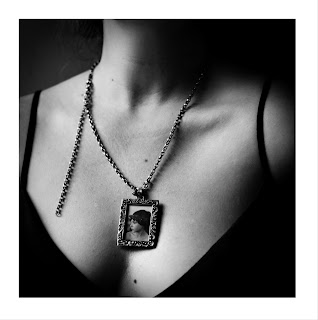
Tell us a little about your self-portraits? What type of theme or ideas is behind them?
Every theme and idea is different for each one. I try very hard to always reflect what I’m really feeling in a photograph, and this has taken years of practice. We’re conditioned to smile and kind of mentally check out when a camera is stuck in our face. Self-portraits are not only technically and mechanically difficult, but they can be psychologically troubling, as well. It’s just you and the lens – there’s nowhere to hide, and sometimes you’ll be surprised by what you’ve captured without even realizing it.
Many of your self-portraits are nudes, what are you exploring with this artistic choice?
Vulnerability, mostly. It’s also a statement against the idea that nudity always has to be sexual. Some of my nudes do come from a place of deep sexuality, but it’s not about sex itself – it’s about being the master of your own awareness: this is my body and some fucking shitty things happened to it along the way, but here I am now, and this is what I’ve learned. I’m opening myself to you in this way to show you that you’re not alone and to show myself how far I’ve come. It’s an amazing thing to be secure in your own skin.
As a female artist would you say it is more difficult to be an artist? Would you say that female artists have more to prove, if so why do you think that is true?
I can only speak for myself on this, and for me, the answer is no. I’ve never felt that my gender was a factor in my success as an artist, and it’s never been a hindrance.
What’s the best and worst thing about being an artist? How do you stay motivated?
 |
| Provided by Jennifer Fields-Summer |
The best is having a muse, or a reason, to create. That’s also the worst. Some of my best work (both photographically and written) has come from very difficult life experiences. As painful as it can be, I think the process of turning these things into art is very therapeutic and gives us an element of control that we might not have had during the actual events themselves. It can be cathartic. Motivation is hard for me. Artists in general tend to be a bit scatter-brained and we’re slow to finish things. I try not to put too much pressure on myself and I try to look for a reason for why I’m feeling uninspired or unmotivated and then consequently adjust my thought process.
What advice would you give to other artists?
Don’t compromise and try not to think about your audience. Just get it out, stay true to yourself and let it go from there. There will always be people who will love your work, and people who will hate your work, and they usually do so with equal fervor.